




Market Bulletin – Summer 2026: changing consumer trends in red meat at retail
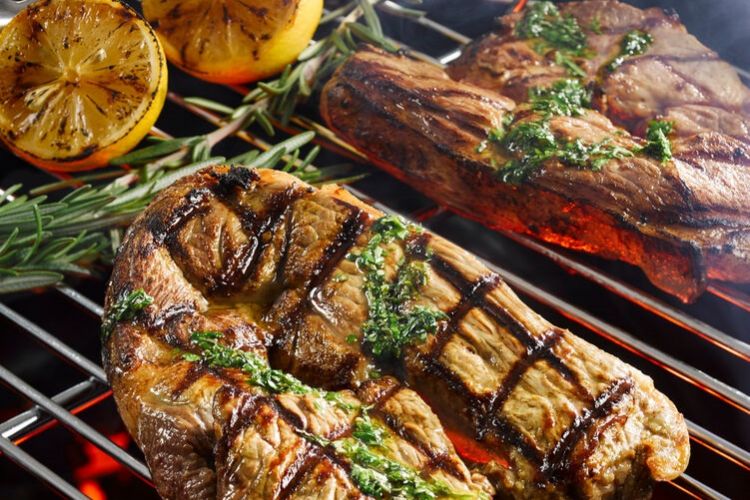
This month’s Market Bulletin looks at how red meat sales at retail performed during the summer 2026. Worldpanel by Numerator data points to strong demand for beef burgers and lamb kebabs, alongside a growing role for promotions and convenient products.
Glesni Phillips – Market Intelligence Executive
Overview
- Summer red meat sales rose by 2% year-on-year to 124,500 tonnes.
- Beef led the growth - up 12%, with burgers and steaks performing strongly.
- Lamb volumes fell by 1%, but lamb kebabs experienced strong growth (+27.5% on the year)
- Promotions became more prominent, while Welsh summer red meat sales grew by 1%.
What does this mean for industry?
The red meat sector can expect continued opportunities in summer dining but will need to adapt to increasingly hot weather and cost-conscious consumers by offering convenient, easy-to-cook products that suit changing eating habits. With beef performing strongly and demand for premium and value options both growing, producers and retailers should focus on innovation, targeted promotions and products that deliver quality, flavour and affordability to make the most of future summer occasions.
Summer red meat sales outperform the wider market
Worldpanel by Numerator’s 16-week summer analysis, covering 18th May to 6th September 2026, reported that the defined summer red-meat category* sales outperformed the total Meat, Fish and Poultry (MFP) market at retail. During the period, around 124,500 tonnes of the summer red-meat category was sold at GB retail, which was 2% higher than the same period a year earlier, whilst total MFP volumes remained steady with a 0.1% growth, and total grocery volumes were down by 0.2%. The increase was supported by shoppers buying slightly more per trip (+1.3% on the year) and a modest rise in purchase frequency.
YEAR-ON-YEAR CHANGE OF SUMMER RED MEAT VOLUME SALES AT GB RETAIL:
Beef +12.2%
Lamb -1.3%
Pig Meat -2.3%
The exceptionally hot summer influenced how consumers approached BBQ occasions, with shoppers adapting the timing of meals rather than abandoning outdoor cooking altogether. Across GB, 83 million BBQ occasions were recorded during the 16 weeks ending 6 September 2026, while 46.1% of BBQ consumption during heatwaves took place after 7pm, compared with 28.3% across the summer overall. These changing habits provide useful context for the growth in summer red meat sales, highlighting the importance of offering convenient, easy-to-prepare products that suit evolving consumer needs and summer conditions.
Beef leads growth
Beef was the standout protein, with beef volumes in the summer category rising by 12.2% year-on-year to 38,400 tonnes. This represents the strongest summer volume for beef in the past five years, following a decline in 2025. Burgers and steaks were important contributors, with beef burger volumes increasing by almost 11% year-on-year, and beef steak volumes by 5%. Beef steak marinades also recorded strong growth, up 35% in the added-value category. Many consumers switched from pig meat sausages (volume -2% on the year) to both beef burgers and beef steak, which were key switching winners this summer.
By contrast, lamb volumes in the summer category fell by 1.3% to 6,600 tonnes, while pork volumes declined by 2.3% to 79,500 tonnes. The picture varied considerably by cut, however, with lamb performing very well within the kebab category. Whilst the kebab category across all proteins rose by 13% on the year in volume terms, lamb kebabs specifically rose by almost 28% and was the fastest-growing protein within the category. Additionally, all top-performing new kebab products were lamb-based, indicating strong demand for traditional lamb kebab offerings.
Promotions & premium options shape shopper choices
The share of summer red meat volume purchased on promotion reached almost 41%, an increase of 6 percentage points year-on-year. Promotional activity increased across the main cuts, with the largest rises seen for burgers and kebabs. Burgers also attracted more shoppers: penetration rose by 4%, while the frequency of purchase increased by 4%. Kebab penetration rose by almost 7%, supporting the category’s strong volume growth. Sausages followed a different pattern, with penetration down 2% and purchase frequency down 2.5%, despite a higher share of sales being on promotion. The data also points to growth at the premium end of some red-meat categories. Premium was the fastest-growing tier during the summer period, supported by pork sausages. Premium pork sausage volume sales increased by 6%, whilst pork sausages in the standard tier fell by 8% in volume terms. The proportion of sausages on promotion within the premium tier, however, was greater than that of the standard tier, at almost 58% compared to just 32%.
This suggests that shoppers may have been balancing affordability with the desire to enjoy summer BBQ occasions, using promotions to make red meat more accessible while still seeking out higher-quality, premium options when the perceived value justified the spend. The shift towards burgers and kebabs may also suggest a preference for convenient, versatile BBQ choices that are easy to prepare and share, while the decline in sausage purchasing highlights that promotional activity alone may not be enough to drive demand.
What happened in Wales?
In Wales, the volume of the summer red meat category increased by 1.2% year-on-year, with growth particularly strong for kebabs and burgers, while sausages and chops declined. Across the defined summer red-meat category, shoppers in Wales bought slightly more per trip (+0.9% on the year) and purchase frequency edged up (+3% on the year), while promotional sales became more prominent and were 20% higher on the year. This suggests that shoppers in Wales may have been seeking convenient, good-value options, using deals to balance affordability with the desire to enjoy seasonal eating occasions.
*It is important to note that the defined ‘summer red-meat category’ consists of sausages, burgers, steaks, ribs, chops & kebabs of beef, lamb and pork, and is therefore different to the wider ‘Meat, Fish & Poultry’ category, and the ‘Primary red meat’ category.
Source: Worldpanel by Numerator, Summer 2026 Red Meat Review (16 weeks ending 6 September 2026)
Cattle
Prices – week ending 24th October
The average deadweight prices in England and Wales for steers stood at 649.5p/kg. This was:
- + 3.6p on the previous week
- 9p below year-earlier levels
The deadweight prices for other cattle categories were as follows:
- Heifers: 647.5p/kg (+4.3p on the week)
- Young bulls: 634.0p/kg (-0.5p on the week)
- Cull cows: 476.5p/kg (+4.5p on the week)
Throughput – September 2026
- Total cattle throughput at UK abattoirs = 217,100 head – down 7% on the year.
- Total prime cattle throughput = 160,100 head – down 6% on the year.
- steers -8%, heifers -7%, and young bulls +1%
- Average prime cattle carcase weights = 354.8kg (+6.8kg on the year).
- Adult cattle throughput = 52,100 head – down 8% on the year.


Sheep
Prices – week ending 24th October
The deadweight* lamb SQQ price in GB averaged 719.9p/kg. This was:
- + 0.5p on the previous week
- + 58.5p compared with year-earlier levels,
- 5p higher than the 5-year average (2021-25 average: 581.4p/kg).
Numbers coming forward reached 51,300 head. This was:
- – 7% on the previous week
- + 39% compared with year-earlier levels.
Throughput – September 2026
- Total sheep throughput at UK abattoirs = 1.0 million head – down 7% on the year.
- Lamb throughput = 914,400 head – down 6% on the year.
- Average lamb carcase weights = 20.5kg (up 0.4kg on the year).
- Cull ewe and ram throughput = 126,400 head – down 10% on the year.

Pigs
Prices – week ending 24th October
The EU-spec Standard Pig Price (SPP)* in GB stood at 176.4p/kg. This was:
- – 1.4p on the previous week,
- – 27.3p compared with year-earlier levels,
- 4p higher than the 5-year average (2021-25 average: 186.3p/kg).
Throughput – September 2026
- Total pig throughput at UK abattoirs = 909,100 head – down 1% on the year.
- Clean pig throughput = 890,300 head – down 1% on the year.
- Average clean pig carcase weights = 91.2kg (+0.5kg on the year)
- Sow and boar throughput = 18,800 head – up 13% on the year.


