





The Land Use for Net Zero (LUNZ) ‘Grassland for Net Zero’ project aims to support progress towards grassland use for net zero and promote the uptake of agricultural systems that foster productivity, and healthy soil and agroecosystems.
It hopes to evidence the wider environmental and social benefits of grassland-based beef and sheep systems across the UK, resulting in substantial savings for the industry – estimated to be worth up to £1.6 billion – which will stem from efficient and nature friendly grassland management practices. HCC is a partner in this exciting work and is responsible for a cluster of ten Welsh beef and sheep farms that signed up to gather information to assess the sustainability of their systems.
Recruited in 2025 for their interest in running profitable businesses alongside caring for the environment, the farmers have been practicing agro-ecological management methods for at least five years. This includes rotational grazing, the use of legumes, reducing inputs, and managing multi species swards. More information about the participating farms can be found below.
The Welsh farms form one of four clusters of commercial farms across the UK who are contributing data to the project and feeding back their views. This is in parallel with scientific research across several universities that explores new methods and their impacts.
The project is co-funded by UKRI, Defra (on behalf of England and Wales), DESNZ, and has been co-designed with the Department of Agriculture, Environment and Rural Affairs (DAERA), Welsh Government and Scottish Government.
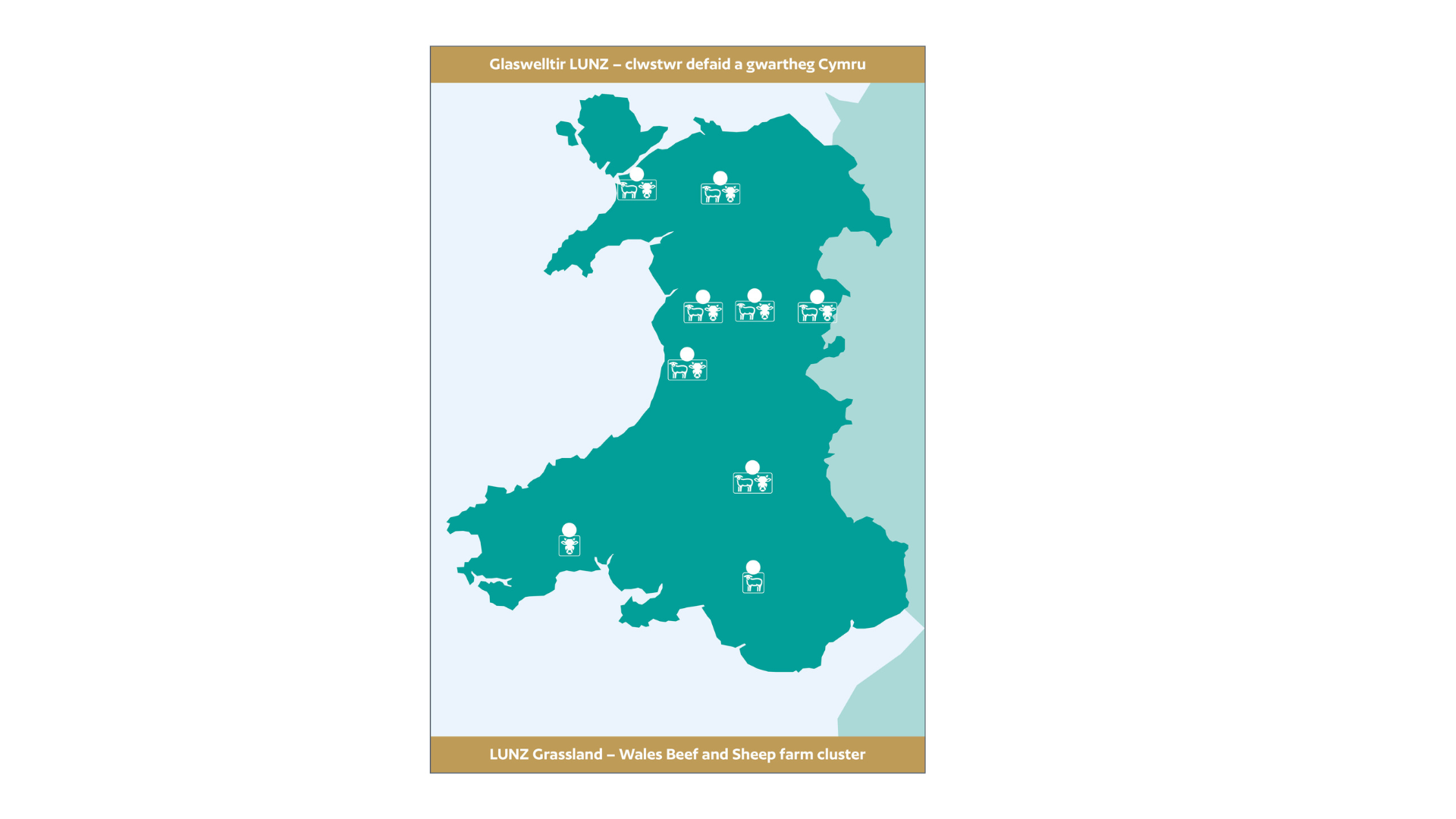
Meet the Farmers
Rest Farm, Henllan Amgoed, Carmarthenshire
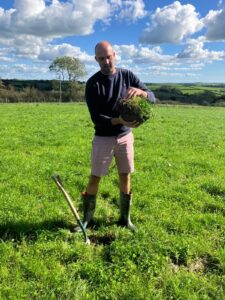
Rest Farm is 164-hectare lowland farm on which Aled and his brother run 480 cattle. Native bred Hereford cross and Aberdeen Angus cross calves are sourced from local dairy farms and transition on to a low input and profitable regenerative farming system managed outside for much of the year. The cattle are all finished at between 20 and 24 months off grassland and forage and sold direct to butchers and restaurants, with their beef having featured at well-known establishments such as ‘Wahaca’ and ‘Honest Burger in London and locally in Carmarthen and Pembrokeshire.
The use of deep rooting and leguminous multi species swards has enabled significant reduction in fertiliser use. Rotational grazing has not only improved cattle performance but increased soil health and organic matter. Aled is leading the way as an early adopter of regenerative practices being certified for the past 5 years and is audited annually by accreditation body ‘BASIS’ to ensure that customers can be sure of the standards achieved by the system, from soil health to environmental gain and community benefits.
Penygelli, Caernarfon
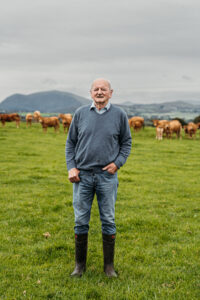
Penygelli is an all-grass, 160-acre farm, grazing 30 Limousin suckler cows, 200 Poll Dorset Ewes and 200 Texel ewes. A data driven farmer, Alwyn performance records both sheep flocks and is continually selecting the best genetics for his system. He has also been ‘techno grazing’ since 2015 when he pioneered the system in the UK. Grassland and soil management have been key to reducing days to slaughter and to capturing carbon with increased grass growth. With a keen interest in soil health and grassland management, the farm has been involved in many innovative projects over the years including GrasscheckGB and RamCompare.
Blaenbwch, Builth Wells
This hill farm extends to 340ha and up to over 380m above sea level. It also has common land rights on Epynt Military Range and Lower Epynt. The Powell family runs 1,300 Epynt Hardy Speckle Face, 700 Welsh Mountains and 1,000 Aberfield-crosses. They keep 25 heifers on a B&B basis and have just started doing Warrendale Wagyu with 54 youngstock on the farm. Alongside the grassland areas, they have 40ha of forage crops and swedes, turnips and fodder are grown to feed the stock over winter. The farm has grown red clover for many years to provide high protein forage and to fix nitrogen for the crops. More recently, Rob has introduced multi species/herbal leys with a good level of legumes in the mixture.
Maesllwyni, Penegoes, Machynlleth
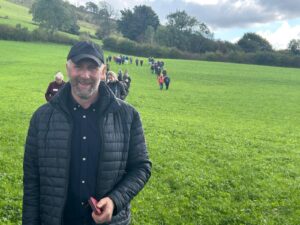
Maesllwyni is a 175ha mixed upland farm which Dafydd has run under organic management for 24 years. Along with 500 Aberfield ewes put to AberBlack and Charolais rams, there are 60 Hereford cross and Stabiliser cows. Ewes lamb indoors in March with the finished lambs sold deadweight from June to October. Calving takes place in April after turnout and the cattle are sold finished at 20-28 months.
With a focus on growing red and white clover in multi species leys to build soil fertility and reduce livestock feed costs, grazing and making quality silage are key to enterprise profitability. Grazing is managed to retain clover in the swards using paddock grazing and set stocking at key times of the year to achieve this. The land which rises to 300m at the highest point, has been managed under agri -environment schemes including Glastir Advanced, and so in addition to the stunning views the farm offers a range of habitats. Dafydd has also completed carbon footprint audits for seven years, and now as part of the LUNZ Grasslands Beef and Sheep cluster, this will be integrated into the Global Farm Metric sustainability assessment.
Pwll yr Hwyaid, Talybont-on-Usk
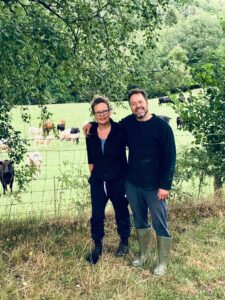
The Morgan family farm in the foothills of the Brecon Beacons in the National Park. There are 700 ewes, both the local Welsh hill breed type and crossbreds, and 26 Limousin cross cows and followers. The cattle and sheep are rotationally grazed through the peak grass growing season. Lambs are sold locally as finished and stores, and cattle are sold as stores. The farm has been part of agri-environment schemes for 25 years and includes 26ha of woodland, 500m of stone walls, 13 kms of hedges and an apple orchard that now supports a thriving apple juice business. Bracken growing on the farm is put to good use as livestock bedding and then composted to return soil nutrients.
Carreg-y-Big, Welshpool
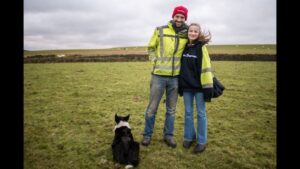
This upland farm extends to 90ha, running a flock of 250 Welsh x North Country Cheviot ewes with a small herd of pedigree Hereford cows. The land has been managed under environmental prescriptions for many years including Tir Gofal, Glastir, Glastir Advanced and now Habitat Wales and includes 5ha of woodland and 2000m of new hedges planted. Forage crops grown are varied but have included, swedes, turnips, fodder rape, grazed cereals and herbal leys. Inputs are kept to a minimum, and no concentrates are fed, stocking rates have been adjusted to the natural carrying capacity of the farm. Ifan is very keen to improve soil health and create aerobic conditions for soil biology to thrive.
Trefnant Hall, Berriew, Welshpool
Trefnant Hall farm is a 280ha upland farm on which Marc lambs 745 breeding sheep and runs a 600 dairy beef system. This is a low rainfall farm with light sandy soils in parts, so Marc has developed a resilient forage system that includes fodder beet herbal leys and alongside the grassland there are woodland and scrub areas.
Over the last 5 years Marc has reduced his fertiliser usage by 80%, introduced mob grazing and now grows 100ha of herbal /multi species leys. Rye is grown after the fodder beet to ensure soil cover.
Marc has participated in several projects with HCC including GrasscheckGB, and the animal health planning project ‘Stoc+’ with his local vet. More recently, Marc has joined the LUNZ Grassland project as one of the HCC beef and sheep cluster farmers.
Moelgolomen, Talybont, Aberystwyth
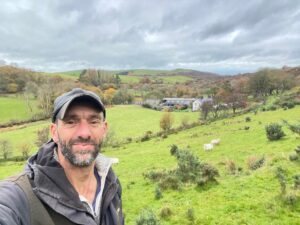
Moelgolomen is a 301ha mixed upland farm rising to 1500 feet above sea level on which a 600-ewe flock of hardy Welsh mountain sheep has been performance recorded with Signet for over 30 years. Genetic gains in the flock have enabled better livestock output from the same resources with a strong focus on grazing and forage management.
Ewes lamb in March/April with all lambs sold fat either to Dunbia and RPF or through a direct sales box scheme. A Welsh Black suckler herd of 30 cows calve in April /May with youngstock sold as stores at 18 months. All land and livestock have been under organic management since 1999, certified through QWFC. The farm lends itself to grassland management to benefit the environment as well as livestock performance. In recent times the farm has switched from set stocking to rotational grazing with fields being sub-divided using electric fencing and hedgerows, with tillage greatly reduced to preserve soil health. Habitats created and maintained on the holding include several miles of hedgerow, with more being added each year with the help of the Woodland Trust, ponds and hay meadows. In addition, there is over 26ha of mixed woodland managed for timber and habitat.
Moelogan Fawr, Llanrwst
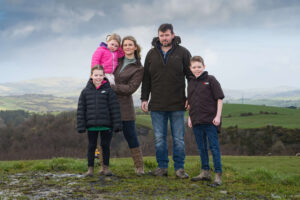
Sian and Llion Jones farm 304 hectares at Moelogan Fawr, an upland unit near Llanrwst rising to 1,500 feet. The farm runs 850 improved Welsh ewes and 145 Stabiliser suckler cows, with an additional 48 heifers. Cattle and sheep are rotationally grazed through a grass-based system, and the farm has been part of Welsh GrasscheckGB, helping monitor pasture growth and performance.
A key focus at Moelogan Fawr is low-input management – improving soil health, biodiversity and business resilience. This includes implementing longer rest periods within grazing rotations, reducing fertiliser inputs, and integrating trees and hedges across the landscape.
The Jones family take a data-driven approach to livestock breeding and management, using performance recording to select hardy, efficient animals suited to the uplands. The flock lambs outdoors in April, and the cattle system is designed to maximise grass growth, animal performance and overall efficiency. Breeding bulls and replacement stock are also sold from the herd, reflecting the emphasis on genetics and grass-based performance.
Penderyn, Aberdare
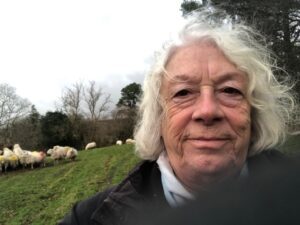
Sue Gay is a tenth-generation farmer now managing a 507ha holding that includes a fenced mountain let out to grazers. The unit is run without any artificial fertilisers and is a self-described uncertified organic farm. There are 90ha in SSSI and the farm has been in Glastir and then Glastir Advanced since 2011 and now in the Habitat Wales scheme. Although stocking rate is low, efficiency of the 200 Texel cross flock is a priority. Performance recorded rams are sourced to ensure high genetic merit sheep that thrive on a grazing and forage- based system. Attention to soil health, grassland management, and use of data to make decisions are key to the business

